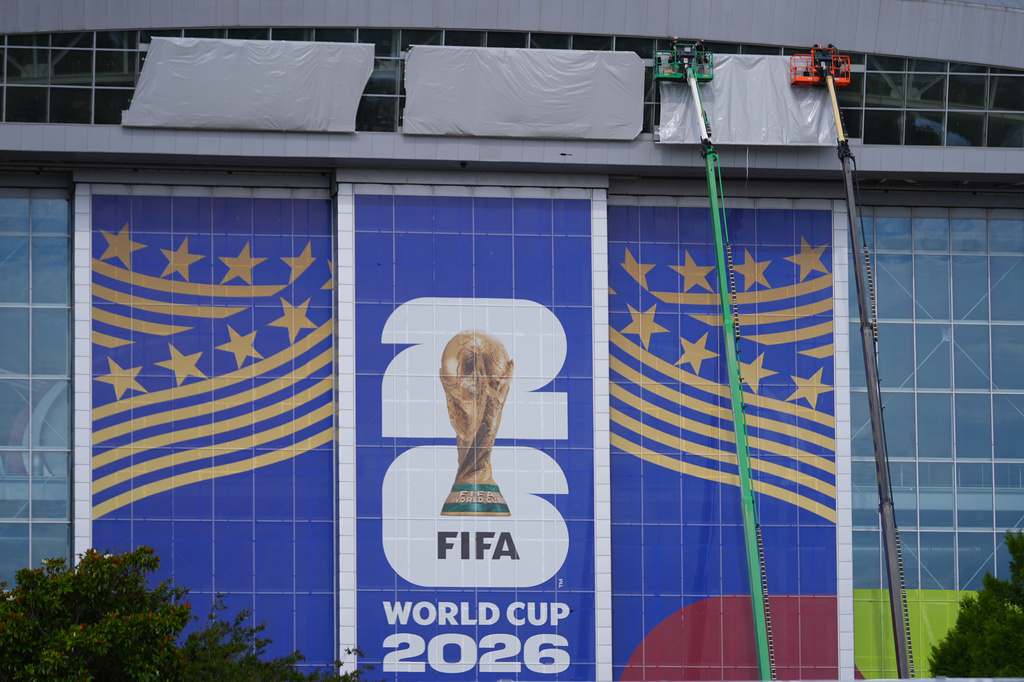
As the 2026 World Cup approaches, a new faith-based initiative is aiming to turn global attention toward something beyond soccer. Victory Beyond the Cup, a Cru initiative led by executive director Heather Reddy, is designed to mobilize Christians around one of the most-watched events in the world and use it as a catalyst for hospitality, conversation, and community outreach.
Speaking about the heart of the initiative, Reddy traced its origins back to both personal experience and global opportunity. A former collegiate soccer player, she said the idea grew out of recognizing the cultural scale of the World Cup and what it represents. “When you think about five billion people who are watching, you’re like, as the church, we need to be engaged in some way,” she said. “What would it look like to equip believers and the church to have spiritual conversations around the World Cup using watch parties?”
At its core, Victory Beyond the Cup encourages Christians to open their homes during tournament matches and invite neighbors, friends, and coworkers into shared viewing experiences that can naturally lead to deeper conversations. Reddy emphasized that the World Cup already functions as a global gathering point. “It really is a gathering place,” she said. “We have the opportunity to step into this cultural moment in a really significant way.”
The 2026 FIFA World Cup, scheduled to run from June 11 through July 19, will be hosted across the United States, Canada, and Mexico, marking the first time three nations have jointly hosted the tournament. U.S. host cities include Dallas, Houston, Los Angeles, Miami, Atlanta, and others as millions of fans are expected to travel throughout North America for the tournament.
(We invite you to listen to the conversation between Jalon Caldwell and Heather Reddy in the podcast below).
Why the World Cup Matters for Global Engagement
For Reddy and her team, the World Cup stands apart from other sporting events because of its international reach and cultural unifying power. Unlike many leagues or tournaments tied to specific regions, the World Cup draws attention from nearly every corner of the globe, often pausing normal life in participating countries.
“It is the world’s sport,” Reddy explained. “You can go into any country, bring a soccer ball, and get a game going within minutes.”
She pointed to stories that highlight just how deeply the tournament resonates across divides. One anecdote she shared came from a friend who grew up in Colombia. During World Cup matches, she said, even people on opposing sides of conflict would stop fighting to watch games together.
“She told me that every four years when the national team would play, there would be guerrilla fighters, captives, and police officers standing shoulder to shoulder,” Reddy said. “For 90 minutes, our country would be at peace.”
For Reddy, that shared pause in global tension represents an opening. “It is such a unique time where people just see each other differently,” she said. “If we step into it by seeking to love and know people, that’s powerful.”
A Vision That Expanded: From Thousands to Tens of Thousands
The scale of Victory Beyond the Cup’s ambition has grown significantly since its earliest planning stages. What began as a relatively modest target quickly expanded during a prayer gathering among ministry leaders.
“Initially our goal was 10,000 believers in 1,000 churches,” Reddy said. “But as we prayed, multiple people stopped and said, ‘We need to add a zero to this.’”
That moment of expansion became central to the initiative’s philosophy. Rather than relying on a small group of leaders or churches, the project was intentionally designed to depend on widespread participation across denominations and ministries.
“The heart behind it was that we didn’t want this to be something a small group could accomplish on our own,” she said. “We really had to trust the Lord and depend on partnership across the body of Christ.”
The revised goal—mobilizing 100,000 believers in 10,000 churches—reflects that broader vision of collective engagement, with churches worldwide invited to participate in shared outreach efforts centered on World Cup gatherings.
Equipping Everyday Believers for Hospitality and Conversation
A key feature of Victory Beyond the Cup is its practical toolkit designed for everyday Christians, not just pastors or ministry professionals. The initiative provides physical and digital “host kits” intended to make organizing a watch party simple and accessible.
Reddy said the goal was clarity and ease. “People were saying, ‘Just tell me what to do—I need it to be really simple,’” she noted. “So there’s a checklist, a vision card, and step-by-step guidance for hosting.”
The kits include conversation prompts, soccer-themed games like bingo, and even curated recipe suggestions from countries participating in the tournament. A digital version, available in multiple languages, also includes training videos that help hosts learn how to naturally engage guests in faith-based conversations.
“We want you to walk into that party confident and expectant that God is going to move,” Reddy said. “But also intentional about loving the people you’re inviting.”
One of the most unique elements is a global recipe book that allows hosts to connect culturally with participating nations through food. The aim, Reddy explained, is to remove barriers and help people feel equipped to host meaningful gatherings regardless of their experience level.

Early Momentum and Stories from Across the Country
Even before the World Cup begins, early signs of engagement are emerging in host cities and local churches. Reddy described a growing network of pastors, ministry leaders, and laypeople who are already organizing events and outreach efforts.
In one example, a partner in Massachusetts has begun planning large-scale viewing events using an LED screen and coordination across multiple churches. “He’s invited about 10 to 15 churches to come together,” she said, noting the collaborative spirit behind the effort.
In Oregon, another participant who does not even consider herself a soccer fan has embraced the initiative because of its relational focus. “She said, ‘I see this as an opportunity for believers and the church to really engage our community,’” Reddy shared.
In Orlando, a church member approached her pastor with the idea of participating, eventually being appointed as an outreach coordinator. That role now involves helping families host gatherings at home while also coordinating church-wide watch events.
“These are just everyday people saying, ‘I want to be part of what God might do in my city,’” Reddy said.
Addressing Fear, Pressure, and Relational Barriers
While the initiative is designed to be accessible, Reddy acknowledged that many believers feel hesitant about hosting or initiating spiritual conversations. Fear of rejection, awkwardness, or feeling unqualified can all serve as barriers.
“There’s fear that gets in the way,” she said. “What are they going to think of me? Is this going to ruin the relationship?”
Rather than encouraging pressure-filled conversations, Reddy emphasized a more relational approach centered on curiosity and care. Hosts are encouraged to focus first on hospitality and genuine interest in others.
“Let’s take the pressure off that you have to force a conversation,” she said. “Instead, enter the party wanting to get to know people and be curious.”
Simple questions—about someone’s background, upbringing, or thoughts on faith—are offered as natural entry points into deeper discussion. The goal is to allow relationships to develop organically rather than through forced moments.
A Lasting Impact Beyond the Final Whistle
While the World Cup itself will conclude after several weeks, Reddy believes the long-term impact of the initiative is where its greatest potential lies. The aim is not only short-term engagement but long-term transformation in how believers view everyday evangelism and hospitality.
“The World Cup has an end date,” she said. “But the hope is that it sparks a desire to pray for people and to realize, ‘I can have these conversations.’”
She envisions the initiative equipping tens of thousands of believers with confidence and experience that extends far beyond the tournament.
“Can you imagine 100,000 people who now know how to share their faith?” she said. “Maybe they start a relationship during the World Cup, and three years later that person comes to know Jesus. We may never even know about it—but it happened because they were equipped.”
For Reddy personally, leading the initiative has also been deeply formative. She reflected on how the scale of the project has challenged her understanding of identity and success.
“I am deeply loved by God, regardless of performance,” she said. “My identity isn’t found in whether this succeeds or fails. It’s found in who He says I am.”
As anticipation builds toward 2026, Victory Beyond the Cup continues expanding its network of churches and participants, aiming to turn a global sporting moment into a global opportunity for connection, conversation, and community.
You can reach Victory Beyond the Cup here